


 Cart
Cart
 sales@molnova.com


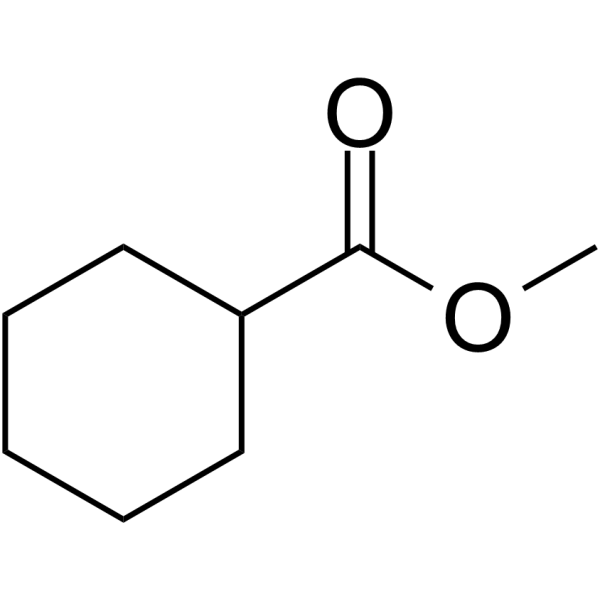
Methyl cyclohexanecarboxylate
CAS No. 4630-82-4
Methyl cyclohexanecarboxylate( Hexahydrobenzoic acid methyl ester | Methyl hexahydrobenzoate )
Catalog No. M27564 CAS No. 4630-82-4
Methyl cyclohexanecarboxylate is an endogenous metabolite and used as a material for chemical synthesis.
Purity : >98% (HPLC)
 COA
Datasheet
HNMR
HPLC
MSDS
Handing Instructions
COA
Datasheet
HNMR
HPLC
MSDS
Handing Instructions
| Size | Price / USD | Stock | Quantity |
| 500MG | 36 | In Stock |


|
| 1G | Get Quote | In Stock |
|
Biological Information
-
Product NameMethyl cyclohexanecarboxylate
-
NoteResearch use only, not for human use.
-
Brief DescriptionMethyl cyclohexanecarboxylate is an endogenous metabolite and used as a material for chemical synthesis.
-
DescriptionMethyl cyclohexanecarboxylate is an endogenous metabolite and used as a material for chemical synthesis. Methyl cyclohexanecarboxylate is a flavouring ingredient with berry, estery, and fruity tasting.
-
In Vitro——
-
In Vivo——
-
SynonymsHexahydrobenzoic acid methyl ester | Methyl hexahydrobenzoate
-
PathwayOthers
-
TargetOther Targets
-
RecptorBacterial|β-Lactamase
-
Research Area——
-
Indication——
Chemical Information
-
CAS Number4630-82-4
-
Formula Weight142.198
-
Molecular FormulaC8H14O2
-
Purity>98% (HPLC)
-
SolubilityIn Vitro:?DMSO : 100 mg/mL (703.23 mM)
-
SMILESCOC(=O)C1CCCCC1
-
Chemical Name——
Shipping & Storage Information
-
Storage(-20℃)
-
ShippingWith Ice Pack
-
Stability≥ 2 years
Reference
1.Arakawa, Yoshichika, et al.β-LACTAMASE INHIBITOR. WO2019221122A1.
molnova catalog



related products
-
Bufotaline
Bufotaline is a kind of poisonous secretions of toads.
-
DMPS-Na
DMPS-Na is an arsenicolytic agent with toxicity that can be used to study cell membranes.
-
Dynorphin A (1-10) T...
Dynorphin A (1-10) (TFA), an endogenous opioid neuropeptide, binds in the transmembrane domain of the κ-receptor.
